
For years, satellite and wireless connections were seen as “last resort” links. Today they’re powering construction trailers, rural offices, pop-ups, mobile operations, and multi-site retail chains. They deliver fast turn-up times, reach where fiber can’t, and provide a critical backup path when landlines falter.
But they come with one major challenge: data caps.
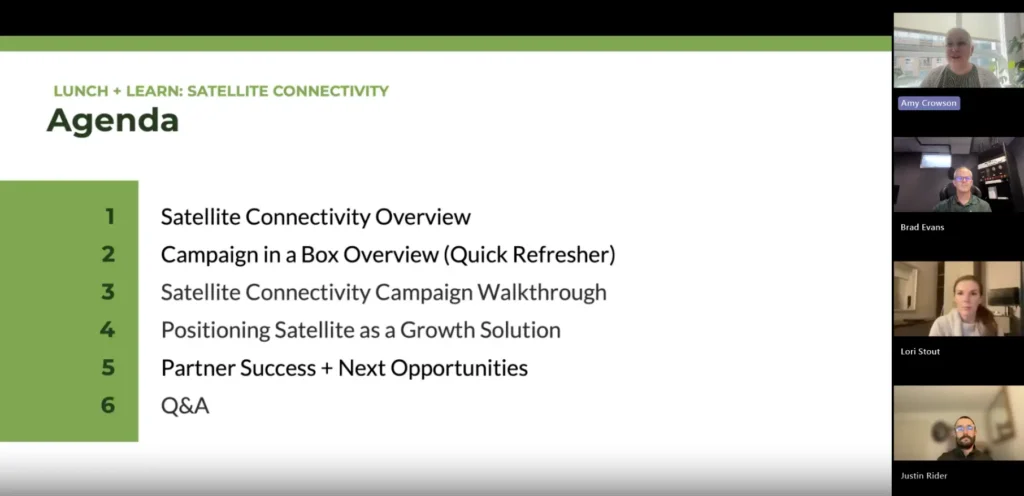
Providers like Starlink are tightening usage limits, throttling performance once sites hit a monthly threshold, or charging thousands more for higher tiers. As Amy Crowson, Bigleaf’s Direct of Brand and Partner Marketing, noted during our satellite webinar, “Starlink actually just started throttling their plans to 50 gigs… everything gets really slow… or they have to pay thousands more.”
For MSPs supporting distributed, wireless-first, or connectivity-constrained businesses, this isn’t just a budget problem. It’s a real risk to uptime and customer experience. Throttling turns a fast connection into a 1 Mbps bottleneck, which is effectively an outage in disguise.
Throttling Turns “Fast” Into 1 Mbps: Why This Is So Dangerous
Once a satellite plan exceeds its cap, providers often throttle speeds down to around 1 Mbps. At that level, VoIP calls fail, point-of-sale systems break, SaaS tools become unusable, and cloud apps time out. Remote access collapses, and even basic browsing struggles. It’s downtime without the “down.”
As Bigleaf’s Senior Sales Engineer Brad Evans put it, “The worst thing possible is to get throttled down to 1 megabit throughput.”
What makes this worse is how easy it is to hit those caps. A Windows update, a background sync tool, a single user streaming video, or a security patch wave can consume tens of gigabytes in hours. Without intelligent controls, MSPs are left firefighting preventable outages.
How Bigleaf Keeps You Under the Cap, Without Breaking Performance
Bigleaf was built specifically to manage multi-circuit environments where links have different strengths, limitations, or cost structures. Satellite connections (Starlink in particular) benefit tremendously from Bigleaf’s intelligent routing, visibility, and policy tools.
Here’s how Bigleaf turns a capped circuit into a predictable business asset.
Intelligent Load Balancing That Thinks in Real Time
Bigleaf continuously monitors each circuit’s health, performance, and usage. As Starlink usage climbs toward the cap, Bigleaf can automatically shift low-priority or high-volume traffic to other links such as 5G, LTE, cable, or fiber. This protects the satellite connection from runaway consumption while preserving it for traffic that needs stability and low jitter.
By dynamically steering traffic based on real conditions, Bigleaf helps MSPs keep Starlink predictable, preserving performance for the apps that matter most.
Per-Application Steering for Precise Traffic Control
Bigleaf doesn’t rely on static port lists or guesswork. Its app-aware intelligence understands the difference between VoIP, SaaS, video conferencing, streaming, OS updates, and more. That allows MSPs to intentionally choose which traffic should use satellite, and which should not.
As Justin Rider explained, “You can pick and choose which circuits the different types of traffic flow over… maybe you want VoIP on Starlink… but block bulk data or streaming.”
This makes it easy to reserve satellite bandwidth for mission-critical tools like VoIP, POS, and cloud workflows, while shifting or outright blocking traffic like file sync, streaming, or update services that would burn through caps quickly.
Blocking or Limiting High-Volume Traffic Before It Becomes a Problem
Some categories of traffic simply don’t belong on a metered circuit. Bigleaf allows MSPs to block or limit bandwidth-heavy applications such as operating system updates, cloud backups, OneDrive/Dropbox/Drive sync tools, CCTV uploads, streaming media, or guest Wi-Fi. Limiting these categories prevents situations where a single background update consumes half a monthly data cap before anyone notices.
With proactive controls in place, MSPs can keep sites under their limits without babysitting the connection.
Usage Tracking and Alerts to Prevent Surprise Overages
Inside the Bigleaf dashboard, MSPs can view real-time usage data, historical trends, and application breakdowns for each circuit. This visibility helps teams understand which apps or devices tend to consume the most data, adjust policies accordingly, and set alerts as sites approach their monthly thresholds.
Instead of learning about throttling after the fact, MSPs can forecast and prevent it.
Policy Templates for Easy, Scalable Rollouts
For MSPs managing multiple sites, or entire distributed organizations, Bigleaf makes it easy to create reusable policy templates tailored to satellite environments. Templates like “Starlink Conservation Mode,” “Bulk Update Blocker,” or “Critical Apps Only” ensure consistent protection across dozens or hundreds of customer sites. This standardization improves speed, reliability, and operational efficiency across the board.
The “What to Prioritize” Matrix: A Practical Guide for MSPs
To simplify planning, here is the practical prioritization framework that emerged from conversations with MSPs, Bigleaf engineers, and real-world customer deployments.
High-priority, low-volume traffic, such as VoIP, POS, SaaS apps, DNS/DHCP, real-time communications, and remote desktop, should be allowed on Starlink because it isn’t bandwidth-heavy and benefits from Bigleaf’s stability.
Moderate-usage business traffic, like general browsing and collaboration tools, can be allowed with monitoring depending on the site’s usage patterns.
High-volume or burst-heavy traffic, including OS updates, security patch waves, cloud sync agents, offsite backups, CCTV uploads, streaming, and guest Wi-Fi, should be restricted or blocked on metered circuits to prevent accidental overage or throttling events.
This matrix gives MSPs a predictable foundation for every satellite-enabled deployment.
Where Bigleaf’s Cap Management Pays Off Most
These controls are especially valuable in environments where satellite is primary, secondary, or the only connection available:
- Construction trailers and temporary sites: Keeps OS updates or cloud sync tools from burning through the monthly cap overnight.
- New site turn-ups with delayed fiber: VoIP and SaaS stay stable on Starlink while heavy traffic shifts to wireless or cable.
- Rural or remote offices: Critical apps remain usable, even with tight data budgets.
- Retail chains and clinics: Consistent templates ensure predictable costs and reliable uptime across locations.
- Seasonal, mobile, or pop-up operations: Bigleaf preserves business continuity without surprise throttling events.
When connectivity is unpredictable, Bigleaf gives MSPs control.
Bigleaf Makes Starlink Predictable, Performant, and Business-Ready
Satellite connectivity is becoming core to modern networks, but data caps and throttling introduce real risk. Bigleaf provides the intelligent routing, visibility, and policy tools MSPs need to protect performance, control usage, and prevent cost overruns.
Or as Brad summarized it perfectly:
“There can and will be a way to intelligently work with that… so we can stay within the boundaries of that data cap.”
With Bigleaf in place, Starlink and other satellite connections become not just usable, but dependable, predictable, and fully business-grade.

Turn Satellite Challenges into Sales Wins
Bigleaf’s Satellite Connectivity Campaign-in-a-Box gives partners everything they need to bring the Bigleaf + Starlink value story to market fast, including:
Co-branded sales sheets, infographics, and slide decks
A ready-to-deploy webinar kit (title, description, banner, slide deck, and speaker notes)
A four-part email series designed to address metered plans, remote-site challenges, and Bigleaf optimization
Social posts, companion videos, and industry-specific messaging
A complete deployment guide and recommended 4-week launch timeline
Whether you’re a one-person shop or a full sales team, this campaign equips you to capture satellite-driven demand, educate customers on metered-plan impacts, and win high-value deals in remote or bandwidth-constrained locations — all with less marketing lift.
See It in Action
Satellite connectivity isn’t just about getting online anywhere.
It’s about helping your customers get reliable, business-grade performance from Starlink and other LEO services—while giving you the edge to win more of those opportunities.
To learn more now, watch the on-demand webinar: