
Why Yesterday’s Reports Are No Longer Enough
Most restaurant decisions are still influenced by yesterday’s reports. Labor adjustments, inventory planning, and service changes are often based on data that reflects what already happened rather than what is happening now. In fast-moving restaurant environments, that delay creates risk.
Real-time data changes this dynamic. It allows teams to act while opportunities still exist instead of responding after performance has already been impacted. As digital transactions now account for nearly every customer interaction, restaurants generate a constant stream of operational data. The challenge is no longer collecting information. It is turning that information into intelligence teams can trust and use immediately.
The Difference Between Data and Intelligence
Having access to large volumes of data does not automatically lead to better decisions. Without integration, teams often face information overload. Dashboards multiply, metrics conflict, and critical signals get lost in the noise. When systems operate independently, data creates confusion instead of clarity.
Connected systems change that equation. When ordering platforms, kitchen displays, payment systems, and analytics tools share information in real time, context emerges. Leaders can see how demand, staffing, throughput, and service quality intersect in the moment. Decisions about labor, inventory, and execution become informed actions rather than educated guesses.
Real-Time Visibility Supports Confident Action
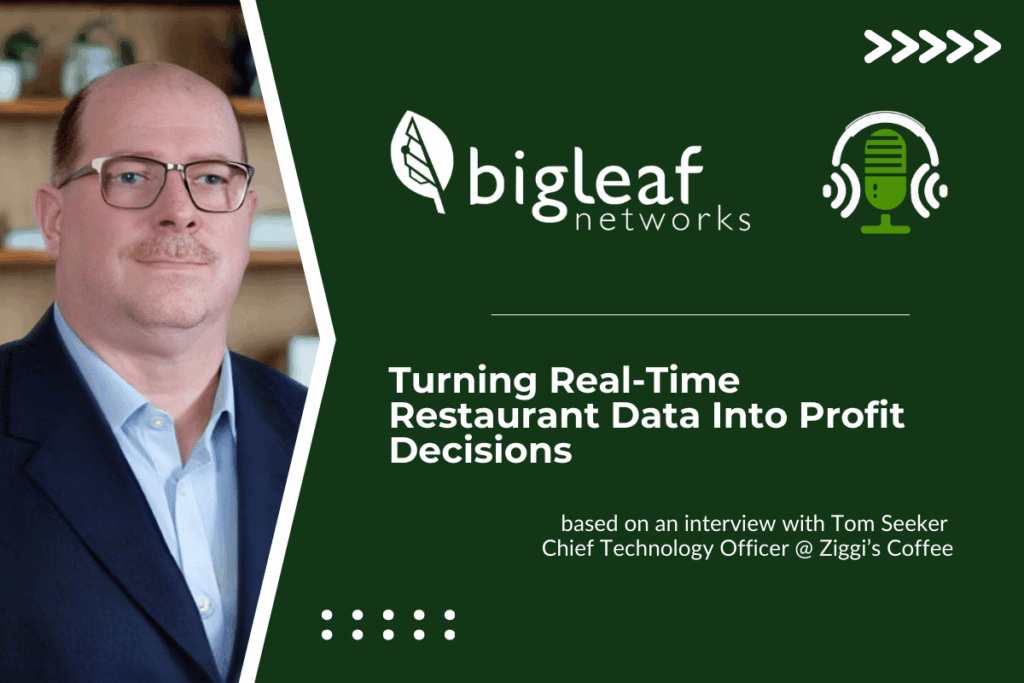
In Episode 34 of Go Beyond the Connection, Tom Seeker, Chief Technology Officer at Ziggi’s Coffee, explains why real-time visibility is essential for modern restaurant operations. When teams trust the information in front of them, they move faster and with greater confidence.
Real-time data allows managers to spot issues before they escalate. A slowdown at one station becomes visible immediately. A spike in mobile orders is detected before service breaks down. Staffing adjustments can be made while they still matter. Instead of reacting after service suffers, teams gain the ability to intervene early and protect both guest experience and margins.
Operational Control Without Added Complexity
One common concern about real-time data is complexity. More data can feel overwhelming if it is not presented clearly. However, connected systems reduce complexity rather than add to it. By aligning data sources, restaurants replace multiple disconnected views with a shared operational picture.
This single source of truth reduces cognitive load for frontline teams and managers alike. Instead of interpreting conflicting reports, teams focus on a consistent set of signals that reflect actual conditions. Real-time data becomes a tool for control, not distraction.
Key Takeaways
- Real-time insight replaces delayed reporting
- Integrated data improves labor and inventory control
- Actionable intelligence depends on system alignment
Real-Time Data as a Tool for Protection and Growth
Real-time data is often framed as a growth driver, but its protective value is just as important. Early visibility helps restaurants avoid service breakdowns, prevent waste, and reduce operational stress during peak periods. Small corrections made quickly often prevent larger issues later.
As restaurant operations become more complex, the ability to act on accurate, real-time information becomes a competitive advantage. Connected systems ensure that data supports decisions instead of slowing them down. When teams can see clearly and act decisively, real-time data becomes a foundation for both resilience and sustainable growth.
Related Links:
- How the Connected Kitchen Powers the Modern Enterprise
- Why the Connected Kitchen Is an Enterprise Strategy, Not Just IT
- Inside the Tech Stack of a Truly Connected Kitchen
- Watch the YouTube Connected Kitchen Episode Playlist
- Connected Kitchen: Tim Newton, CTO @ Long John Silver’s
- Connected Kitchen: John Manes, VP of IT @ Mambo Seafood
- Connected Kitchen: Chris Incorvati, CTO @ Jack’s Family Restaurants
- 10 Reasons Why Restaurant Operators are Hungry for Better Internet Health