
Why Incremental Planning Locks Organizations in Place
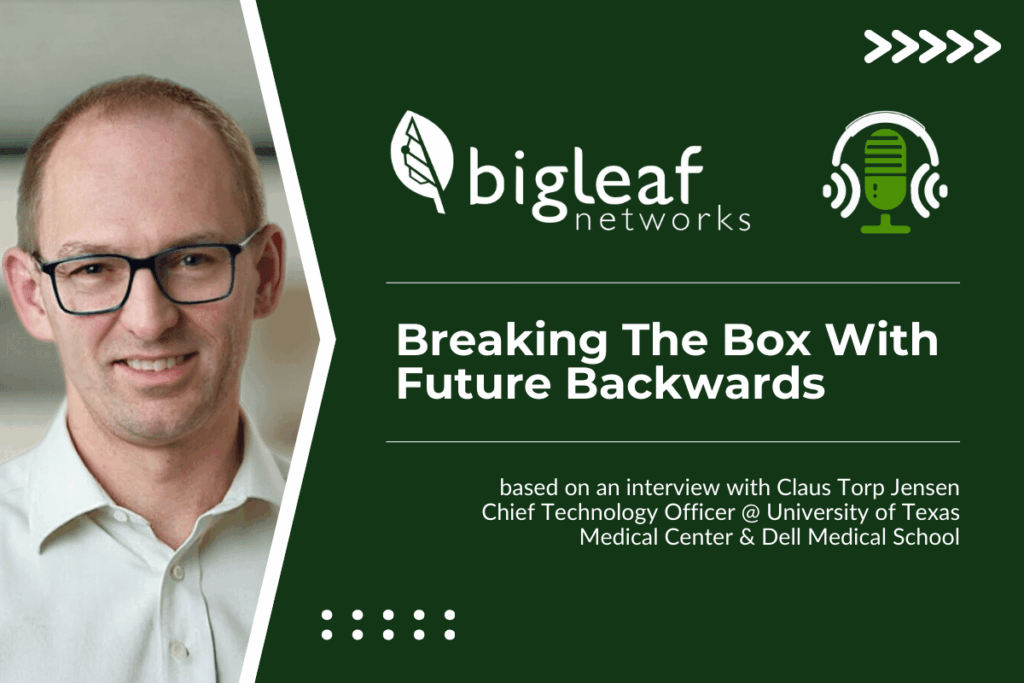
Most technology strategies begin with what exists today. Leaders assess current systems, identify gaps, and attempt to improve them incrementally. According to Claus Torp Jensen, Chief Technology Officer at the University of Texas Medical Center and Dell Medical School, this approach almost guarantees disappointment over long timelines.
Facilities open already outdated. Networks struggle to support new demands. Platforms that once looked sufficient cannot evolve fast enough. Incremental planning optimizes within a box that no longer reflects future realities.
Seeing the Box Is the First Constraint
Claus challenges leaders to rethink how they frame problems. Traditional planning assumes the box of current constraints must be accepted. Future backwards thinking starts by questioning whether that box is even relevant.
As Claus explains, “Nobody can predict the future, but you can prepare for it.” By defining what must be true in 2040, leaders can free themselves from assumptions rooted in today’s limitations and reframe decisions around future capability.
Defining the Destination Before Drawing the Map
Future backwards thinking does not require perfect forecasts. It requires clarity. Leaders define the outcomes their organizations must support decades from now, then work backward to identify milestones, standards, and investments that make those outcomes possible.
This shift transforms planning conversations. Instead of debating tools and features, teams discuss capabilities. Procurement choices favor flexibility. Architectural decisions prioritize adaptability. The result is a roadmap that remains relevant as conditions change.
Turning Vision Into Actionable Discipline
Working backward from a future destination brings discipline to execution. Every initiative is evaluated against its contribution to the end state. Projects that do not move the organization closer are deprioritized, even if they promise short-term gains.
This approach reduces waste, limits rework, and builds confidence across teams. Leaders can explain not only what they are building, but why it matters over the long term.
Confidence Comes From Shared Direction
Organizations struggle when priorities shift constantly. Future backwards thinking creates stability by anchoring decisions to a shared destination. Teams understand how their work fits into a larger story, reducing fatigue and resistance during change.
The box disappears when everyone agrees on where they are going.
Takeaways
- Incremental planning reinforces outdated assumptions
- Future backwards thinking challenges the relevance of current constraints
- Defining the destination clarifies near-term priorities
- Capability-based planning improves long-term resilience
- Shared direction reduces organizational whiplash
Highlights
- Questioning whether the “box” still applies
- Using 2040 as a practical planning anchor
- Shifting from tools to capabilities
- Reducing rework through disciplined prioritization
- Building confidence through clarity
Related Links:
- Future Backwards Thinking: How CTOs Should Build Today’s Technology Strategy
- Planning Technology That Won’t Age Out: Lessons from Future Backwards Thinking
- Breaking the Box: Why Future Backwards Thinking Changes How Leaders Plan
- The Network Is the Business: Why Connectivity Defines Outcomes
- Watch the YouTube Playlist of video episodes
- Watch the YouTube Shorts Playlist
- Subscribe to the LinkedIn Newsletter
- Listen on Captivate: Go Beyond the Connection
Follow Go Beyond the Connection Podcast on social: Linkedin | Facebook | Instagram