
When Simplifying Your Technology Stack Is the Smartest Growth Move You Can Make
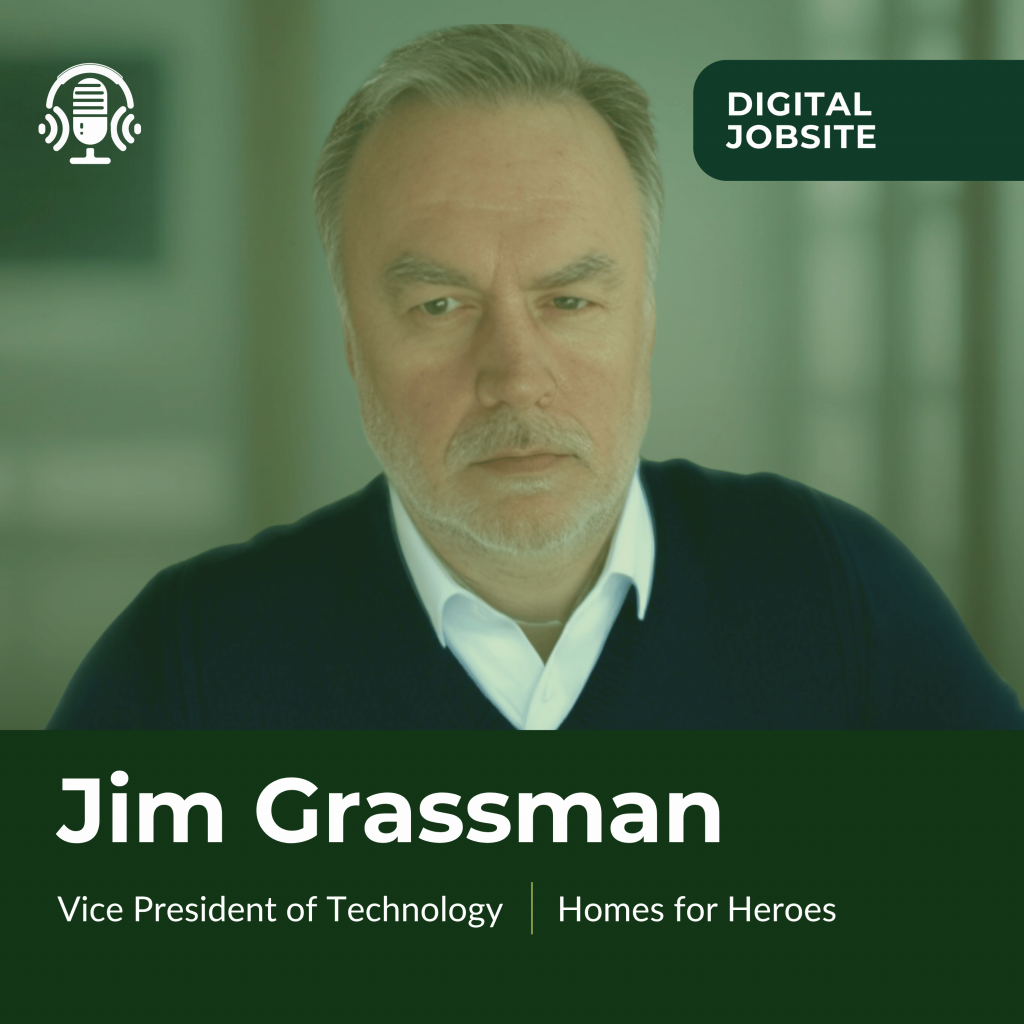
Simplifying technology stack management starts with a mindset Jim Grassman developed long before he worked in technology. Jim Grassman came to technology through law school. That background, learning to break complex problems into their simplest elements, apply the rule, reach the conclusion, turned out to be exactly the discipline that technology leadership demands. As CIO of Homes for Heroes, the nation’s largest affiliate real estate and lending program serving military members, veterans, first responders, healthcare professionals, and teachers, Grassman oversees a fully virtual organization where every technology decision has a direct impact on the people the mission exists to serve.
Simplifying technology stack management is the central argument of this episode, and Grassman makes it plainly. The organizations that scale most effectively are not the ones with the most sophisticated toolsets. They are the ones with the clearest ones. His framework is grounded in real operational experience managing a distributed workforce and a nationwide affiliate network of real estate professionals who depend on reliable connectivity wherever their work takes them.
What You’ll Learn
- Why organizations fall into the silver bullet trap and how to break the cycle of one-off application acquisition
- How the 80/20 rule provides a practical filter for every technology procurement decision
- What it means to build a core native stack and go deep rather than wide across multiple platforms
- Why wireless-first connectivity is a foundational priority for a fully virtual, nationwide workforce
- What genuine vendor partnership requires beyond the contract, and why mission alignment determines long-term success
The Silver Bullet Trap and How to Break Out of It
The pattern Grassman describes is familiar to most technology leaders: a team identifies a problem, someone finds a tool that addresses it, a contract gets signed, and the tool gets used at 10 to 20 percent of its capacity while the license quietly accumulates overhead. Multiply that across departments and years, and the result is what he calls a technology horizon, hundreds of applications brought in with the best of intentions, none of them delivering proportional value.
His counter-strategy starts with a single question: what does the organization already have, and how far can it go? At Homes for Heroes, the answer led to a commitment to Salesforce as the core native platform. going deep rather than layering specialized tools on top. The 80/20 rule governs every procurement decision. If a solution delivers 80 percent of the desired outcome, the question becomes whether the remaining 20 percent is worth the cost and complexity it brings.
“Don’t be afraid to look at everything you have and ask yourself how you can get away with half of it, or even a third. Then think about what that will free you to do.” -Jim Grassman
The goal is not minimal technology. It is purposeful technology, a stack where every tool earns its place, where the team has genuine expertise rather than surface familiarity, and where vendor partners fill specialized gaps without expanding headcount.
Building a Network That Works Where Your Workforce Actually Is
For a fully remote organization, network quality is not a back-office concern. It is a direct determinant of how well the business operates. Homes for Heroes employees work from home or wherever they happen to be. Its affiliate real estate specialists work in the field, at closings, at showings, accessing systems from a phone. No one is returning to a desktop. The infrastructure has to work in all of those environments, not just the controlled ones.
Grassman’s infrastructure philosophy reflects that reality. The organization is targeting full cloud adoption by 2027 as a scalability strategy, not a cost-cutting measure. Cloud-based environments allow the team to add subscriptions as business grows and dial them back when it contracts, without hardware procurement cycles or capital commitments that create drag. Security remains the harder problem: AI-driven threats evolve faster than most organizations can respond, and in a distributed environment the perimeter is effectively everywhere. His answer is smart architecture, ongoing employee education, and vendor partners who stay current with the threat landscape.
Bigleaf Networks gives distributed organizations the WAN intelligence to manage connectivity across multiple paths in real time, so when home internet fluctuates or a mobile connection degrades, applications stay online and the workforce keeps moving.
What Happens When You Actually Simplify
The leaders who get the most out of this conversation are not the ones managing the most complex environments. They are the ones willing to ask honestly what would happen if they cut a third of their current applications. Grassman’s answer is that most organizations would still cover 80 percent of their daily operations, and the resources freed by that reduction would create more strategic capacity than any new tool on the market.
That is the case for simplifying technology stack management, not as a constraint, but as the clearest path to building an organization that can move quickly, maintain security, and grow without carrying the weight of its own accumulated overhead. Explore the companion blog post for a deeper look at the 80/20 framework and wireless-first infrastructure, and browse The Digital Jobsite series for related conversations with technology leaders facing the same challenges.
SUBSCRIBE & LISTEN >
Related Links
- Simplifying Technology Stack for Business Growth | Jim Grassman, Homes for Heroes
- How to scale your network across multiple sites without upending your tech stack
- Inside the Tech Stack of a Truly Connected Kitchen
- Future-Proofing Your Business: How to Embrace Wireless Without Sacrificing Data Security
- The Future of Connected Care: Why Incremental Change Wins in Healthcare
- Connectivity Insurance Strategy: Protecting Revenue Before It Disappears