

Why Your Partner Network Is the Most Underutilized Asset in IT
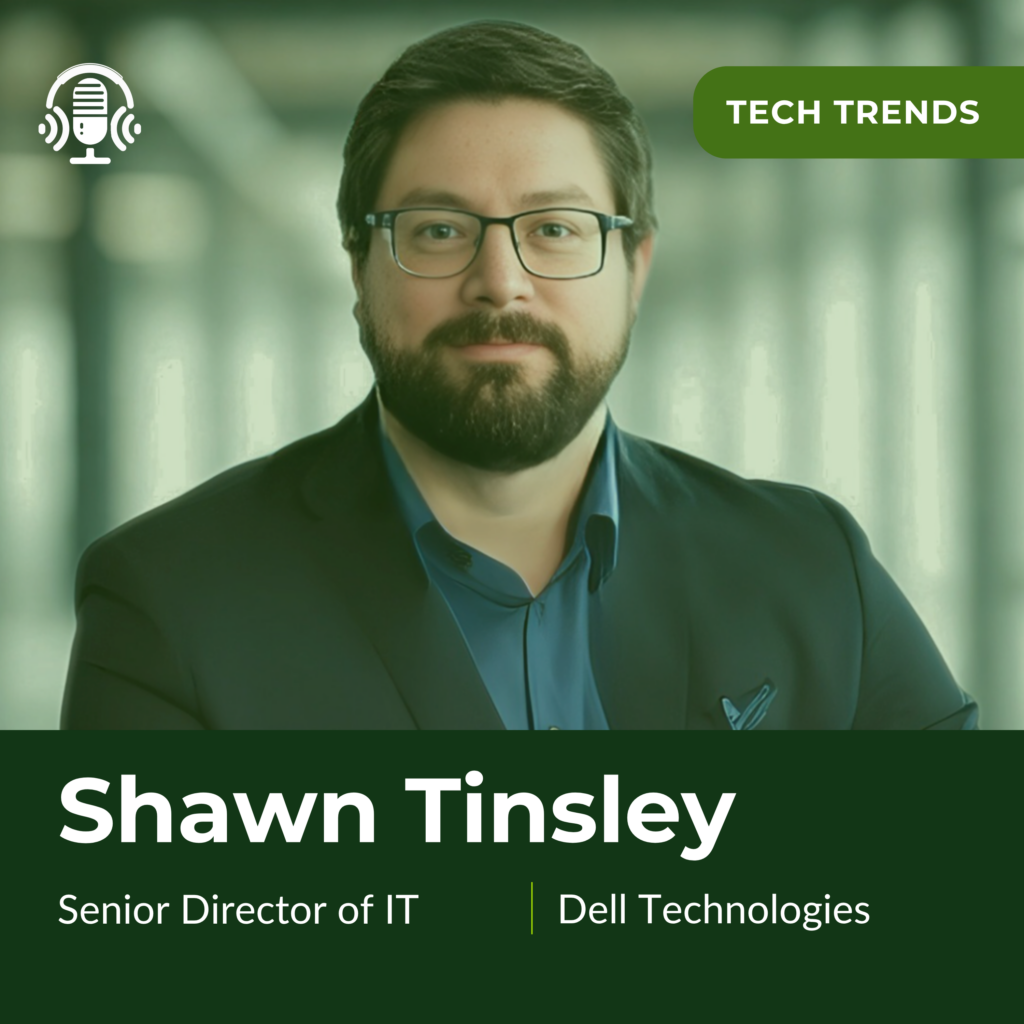
Technology decisions rarely fail because of the technology. They fail because the people, relationships, and organizational structures around the technology were not given the same level of attention. Shawn Tinsley, Senior Director of IT at Dell Technologies, has spent his career studying and living that reality. In Episode 006 of Go Beyond the Connection, he brings together more than two decades of enterprise IT experience and graduate-level research in organizational decision-making to make a compelling case for why strategic IT partnerships are not optional — they are foundational.
The conversation covers practical ground that most IT strategy discussions skip entirely: how to build trust with partners, why culture determines whether technology investments succeed or fail, and what it actually looks like to move an organization from reactive service delivery to proactive, high-performing collaboration.
The Gap No Internal Team Can Close
One of the most direct points Shawn makes is that no single person or internal team can hold all the expertise a modern enterprise requires. Data, process, and infrastructure decisions all depend on inputs that go beyond any one team’s line of sight. Partner networks exist to fill that gap, and organizations that do not invest in them pay a real cost — in missed efficiencies, slower decision-making, and strategic disadvantage.
Shawn draws on his research across more than 250 studies to reinforce the point. The variable that showed up most consistently as a driver of organizational success was not technology sophistication or process maturity. It was culture — specifically, a culture oriented around growth and an active commitment to building and maintaining strong partner relationships.
What a 7,000-Application Cloud Migration Actually Taught Him
Shawn led a cloud migration that moved 7,000 applications from on-premises infrastructure to AWS. On paper, it was a technology project. In practice, it was a change management exercise. The migration succeeded because the team invested as much in communication, trust-building, and aligning objectives with their partners as they did in the technical execution.
He applies the same thinking to a $300 million hospital technology implementation his team led. In a healthcare environment where the stakes are patient lives, getting the technology right required getting the people right first. That meant starting with frontline staff, understanding what they actually needed, and building the implementation plan around those realities rather than around a predetermined roadmap.
From Ticket Takers to Proactive Contributors
One of the sharpest insights in this episode is Shawn’s analysis of what he calls the ticket-taker mentality — teams that wait for instructions rather than anticipating needs or contributing ideas. His research and field experience both point to the same conclusion: this passivity is not a character trait. It is a structural problem. People operate passively when they lack training, have no clear path for growth, and have never been given the tools or permission to do more.
When his team went into one company and introduced a model built on proactive service and genuine enablement, the results were measurable. Over three years, the cultural shift alone — from reactive to proactive — generated $50 million in savings.
Episode Highlights
- Strategic partnerships expand organizational capability beyond what any internal team can achieve alone
- Culture is the most consistent predictor of success across 250 academic studies spanning multiple industries
- A cloud migration of 7,000 applications succeeded through change management and trust, not just technical execution
- Shifting from a passive ticket-taker mentality to proactive service delivery saved one company $50 million over three years
- Identifying core vs. non-core functions and outsourcing the latter is the highest-leverage decision an IT leader can make
Reliable, consistent network connectivity is the infrastructure layer that makes all of this possible. When partner tools, cloud platforms, and distributed teams depend on the network to perform, that network cannot be a variable. Bigleaf Networks provides the SD-WAN and internet optimization technology that keeps enterprise connectivity stable, predictable, and resilient — so IT leaders can focus on the strategic work that drives results.
SUBSCRIBE & LISTEN >
Related Links:
- Simplifying Multi-Site IT with Centralized Monitoring
- Empowering Field and Offshore Teams with Wireless-First Tools
- Building Enterprise WAN Resilience with 5G
- Future-Proofing Your Business: How to Embrace Wireless Without Sacrificing Data Security
- Embracing Resiliency and Efficiency Through Cloud Migration
- The Future of Connected Care: Why Incremental Change Wins in Healthcare
- Connectivity Insurance Strategy: Protecting Revenue Before It Disappears
- Network Health: The Bedrock of Healthcare Cloud Migration