

Why CIO Leadership Is Essential to Healthcare Resilience
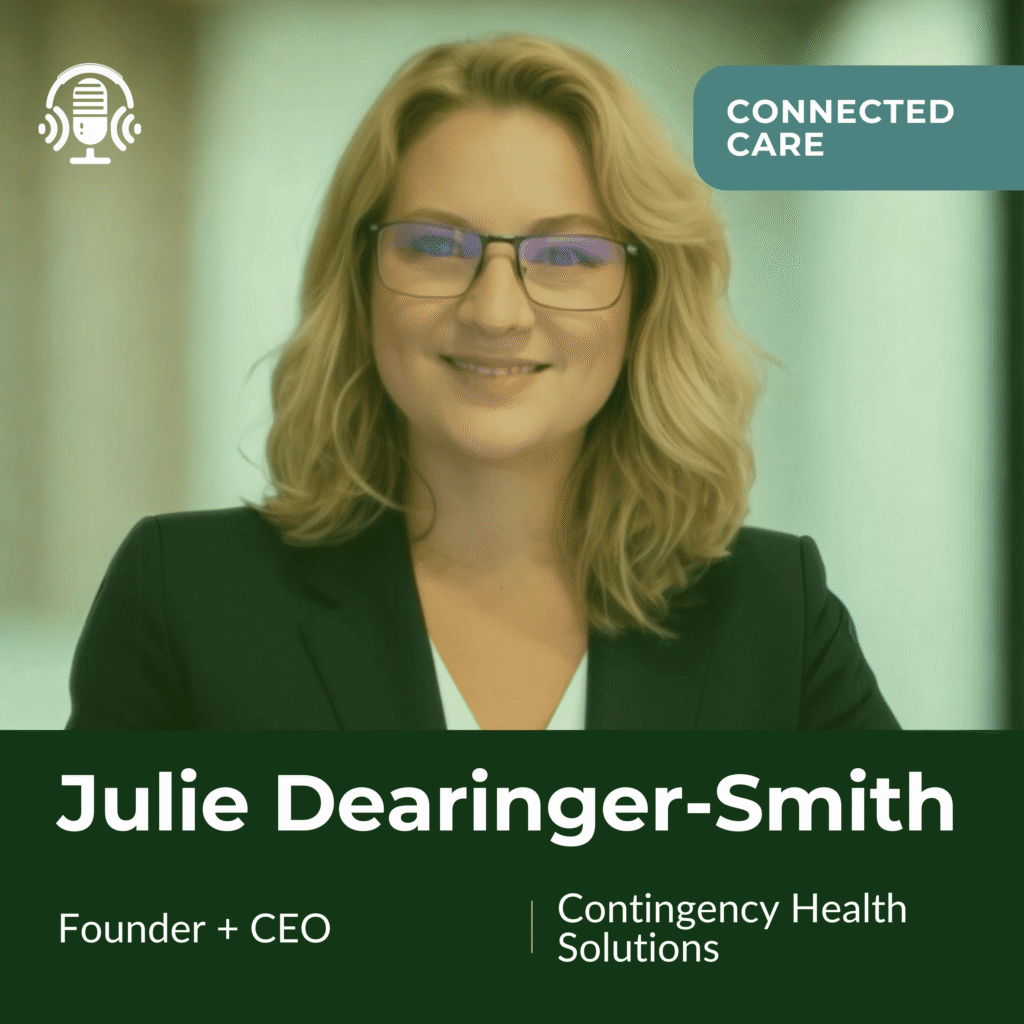
Julie Dearinger-Smith has built a career on building bridges between frontline healthcare experience with technical strategy. In this episode of Go Beyond the Connection, she explains how CIOs can lead not just systems—but people—through one of healthcare’s biggest challenges: operational resiliency. Whether you’re a healthcare IT leader or an executive navigating digital transformation, this conversation is packed with insight on culture, strategy, and crisis readiness.
In Episode 11, Julie, Founder and CEO of Contingency Health Solutions, shares why CIOs must move beyond infrastructure oversight and into strategic leadership. From her background as a bedside nurse and informatics director, she draws out real-world lessons on how to align IT with long-term business outcomes.
Why Healthcare Resilience Fails Without CIO Involvement
Julie dives straight into the core issue: resiliency planning is often seen as a technical checkbox—but it’s actually a business imperative. When systems go down, so do patient services, revenue, and trust.
Many leaders assume downtime won’t happen. But as Julie notes, cyber attacks are constant, and healthcare systems are prime targets. Without backup systems and clearly defined priorities, recovery becomes reactive instead of strategic.
“Even the best technology is completely useless if it isn’t adopted; it’s just a waste of money.”
What’s needed isn’t just better tech—it’s better planning. CIOs need a seat at the table, not just to react, but to proactively prepare for growth, failure, and recovery.
How Strategic CIOs Build Resilient, Aligned Healthcare Systems
Whether it’s IT, clinical teams, or operations, Julie emphasizes that strategy only works when it’s shared. Technology leaders can’t operate in silos. They must collaborate across departments to ensure systems are secure, scalable, and actually usable in times of crisis.
“You must plan meticulously—perform assessments, conduct drills, and involve people with different perspectives.”
She emphasizes that CIOs can bridge the gap between technical work and business outcomes, helping teams stay aligned and ensuring systems support the business instead of slowing it down.
📚 Read more on how Bigleaf supports network resiliency
Transforming IT from Cost Center to Strategic Advantage
Julie challenges outdated views of the CIO as an operational role. She urges healthcare organizations to view IT not as overhead—but as the engine of continuity, access, and care delivery.
This requires changing how we define IT value. It’s not about uptime alone—it’s about enabling revenue, minimizing risk, and helping the people who rely on technology to do their jobs.
🚀 Learn how Bigleaf’s Cloud Access Network supports seamless connectivity—even when outages strike
Conclusion: What CIOs Need to Lead Healthcare Resilience
Julie ends with a strong message: CIO leadership in healthcare resilience is not a one-time project. It’s a mindset, a culture, and a leadership responsibility. If CIOs are left out of the strategy conversation, the entire business risks falling behind—or worse, shutting down.
For leaders navigating digital complexity, this episode offers a clear lesson: stop treating IT like a support desk. Start recognizing it as the foundation of future-ready care.