

The Myth Is Already Debunked
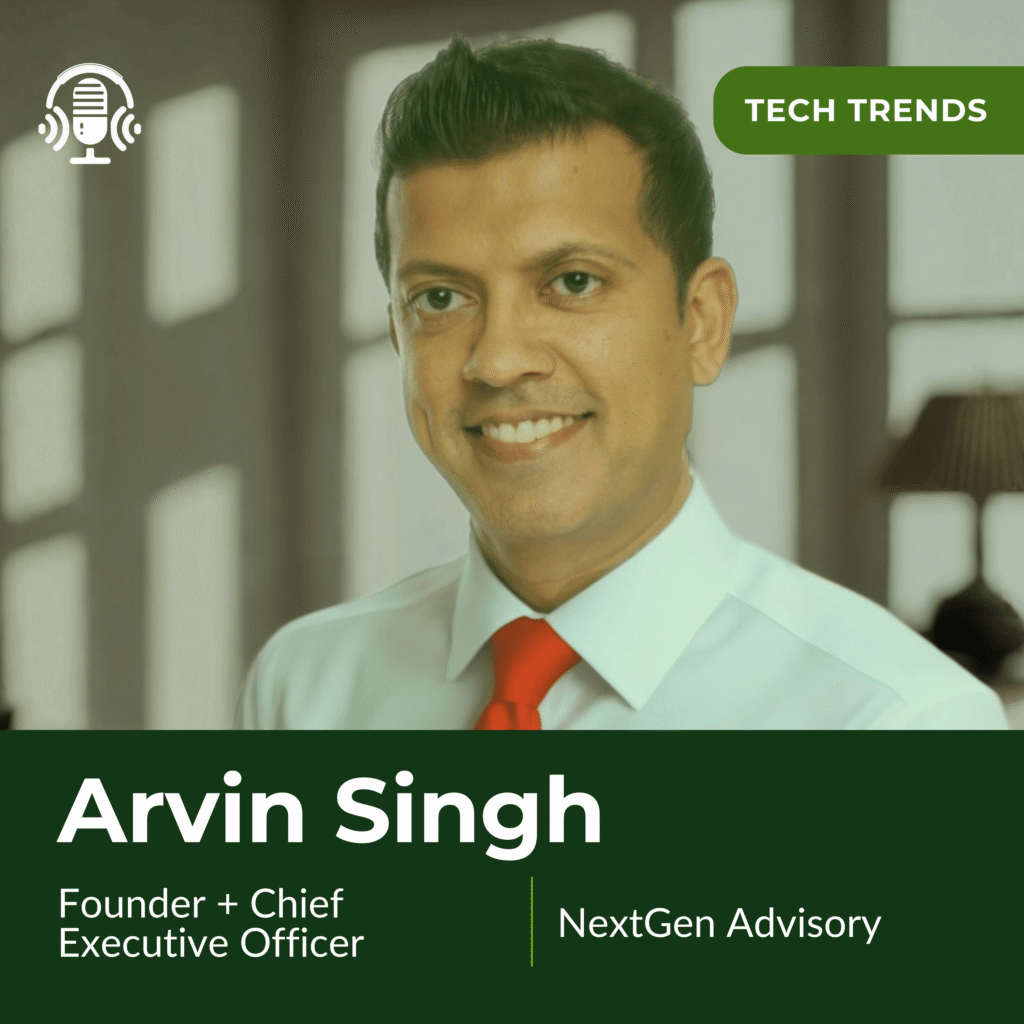
For years, wireless held a secondary role in enterprise network design. It was the backup that kicked in when fiber failed. That assumption has not held up. In this episode of Go Beyond the Connection, Arvin Singh, Founder and CEO at NextGen Technology Advisory, draws on nearly two and a half decades of experience at Verizon to explain why wireless-first infrastructure is now the proven, practical choice for businesses that need to deploy faster, stay resilient, and serve customers without interruption.
Arvin led global presales teams at Verizon through the buildout of 5G at scale, witnessing firsthand how businesses responded when wireless networks matured. The result was not gradual acceptance. Hundreds of thousands of locations moved wireless from failover status to primary connectivity, not because it was trendy, but because performance data made the case repeatedly and clearly.
From Failover to First Choice
“There was a time in our history when wireless was used mainly as backup connectivity to wired circuits. But now, with telecom infrastructure built on ubiquitous nationwide 4G and 5G networks, there is ample capacity, spectrum, and access, and businesses, over the last seven to eight years, have been using wireless as their primary form of connectivity.” – Arvin Singh
Nationwide 4G and 5G buildouts changed the economics and the performance envelope. Enterprises no longer have to wait weeks for fiber installation or accept single-path risk when deploying new locations. Preconfigured wireless appliances go live in minutes. SD-WAN layered on top provides application-aware routing, automatic path optimization, and multi-carrier diversity that maintains uptime even during carrier disruptions. Arvin calls this a level of resiliency that wired-only designs simply cannot match at the pace modern business requires.
Private 4G and 5G networks extend this capability further into environments where macro infrastructure was never built, including manufacturing floors, logistics hubs, and industrial campuses. Enterprises now hold what Arvin describes as the keys to the kingdom: dedicated radio access, isolated traffic, and purpose-built application performance managed as a service rather than an internal burden.
Connectivity as a Competitive Advantage
Arvin is direct about what wireless-first means beyond the network diagram. Faster deployments mean faster revenue. Reliable connectivity supports premium service experiences that earn customer loyalty and reduce churn. Wireless-first eliminates the construction delays and circuit timelines that stall launches, compress margins, and frustrate both teams and customers.
His advice for IT leaders who have not yet tested fixed wireless with production workloads is equally direct: start with a real pilot. Do not limit the test to guest Wi-Fi or a speed check. Put a business application on the connection and measure latency, stability, and performance under real load. The data, in Arvin’s experience, consistently surprises organizations that still hold wired-only assumptions.
Episode Highlights
- Wireless moved from backup to primary for hundreds of thousands of enterprise sites over the past seven to eight years
- SD-WAN and multi-carrier design provide application-aware routing, automatic failover, and path optimization across wired and wireless connections
- Private 4G and 5G networks give enterprises dedicated, isolated control for mission-critical environments including industrial campuses
- Faster wireless deployments reduce customer acquisition costs, shorten time to revenue, and create the foundation for premium brand positioning
- Satellite-integrated 5G and reduced-capability IoT connectivity extend reach into ultra-rural and operational technology environments that wired networks cannot serve
If you are still defaulting to wired-only assumptions, this conversation gives you a practical path to test, validate, and scale wireless-first with confidence. Listen to the full episode, explore related content, or subscribe to Go Beyond the Connection on your preferred platform.