

Is Your Network a Cost Center or a Competitive Advantage?
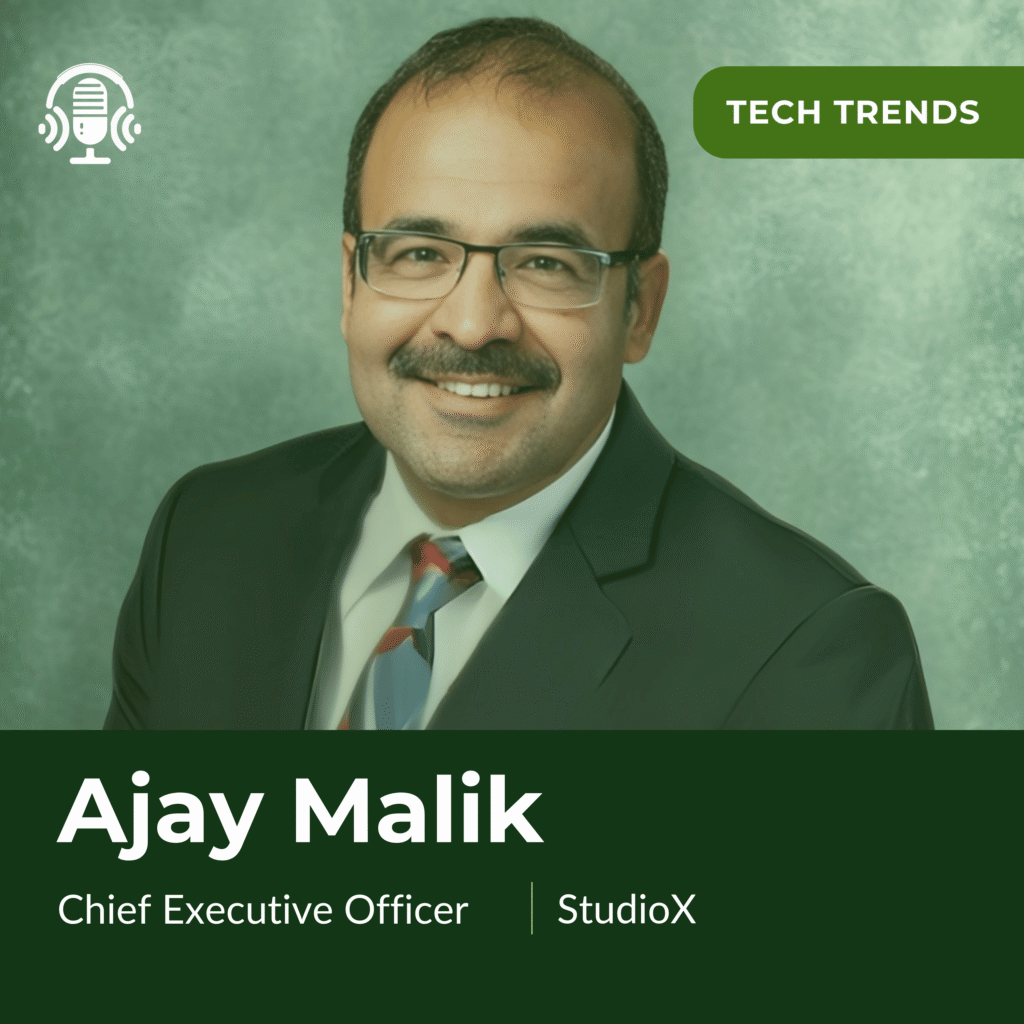
For decades, IT leaders treated wireless as a nice-to-have — something you added once the wired infrastructure was in place. Ajay Malik, CEO of StudioX and one of the architects of the modern Wi-Fi standard, says that framing is not just outdated, it is costing organizations revenue. In this episode of Go Beyond the Connection, Ajay makes the case that a wireless-first network strategy is the fastest route to business growth, and that AI is what turns that strategy from a good idea into an autonomous, self-optimizing reality.
Ajay’s perspective is shaped by 30 years at the center of wireless development — from defining 802.11 protocols at Symbol Technologies and building chipsets at Qualcomm, to shaping enterprise strategy at Google and Cisco. He has deployed wireless infrastructure for Walmart, Macy’s, and JCPenney. He holds more than 100 patents and wrote the book on AI for wireless networking, literally. When he says wireless-first is the only strategy that makes sense in 2025, he is speaking from a position of hard-won operational experience, not theory.
Wireless Is the Access Layer — Everything Else Is Optional
One of the sharpest moments in this conversation comes when Ajay addresses the skeptics who still point to early Wi-Fi outages as a reason for caution. He acknowledges those early struggles — he was there for them, including the famous incident where emptied Walmart shelves exposed metal racks that created enough interference to take down the store’s Wi-Fi. But he draws a clear line between then and now.
Wi-Fi 8 is approaching. Adaptive radios, AI-driven channel optimization, and predictive interference management have made modern wireless infrastructure deterministic in a way that earlier generations were not. The question is no longer whether wireless is reliable enough. The question is whether you can afford the rigidity that comes with staying wired.
“Wi-Fi provides amazing quality. It’s a very reliable medium. Wi-Fi is no longer the medium it used to be.” – Ajay Malik, Chief Executive Officer, StudioX
AI Turns Networks from Reactive to Intelligent
The second major theme in this episode is the relationship between AI and wireless performance. Ajay describes AI as the element that transforms wireless from a passive pipe into a dynamic, context-aware system. Rather than relying on static rules to manage traffic, AI-enabled networks classify and prioritize in real time — ensuring a video call gets bandwidth over a software update, or that a returning hotel guest is auto-connected before they even open their device.
Looking ahead, Ajay anticipates a significant shift toward autonomous networks by 2030 — systems where cooperating AI agents at the service provider, access point, and device level coordinate without human intervention. The network becomes an orchestra, with a reasoning AI serving as the conductor. Support tickets drop. Truck rolls disappear. Engineers move from break-fix work to policy design and AI orchestration.
Episode Highlights
- Why wireless-first cuts deployment time and infrastructure cost across multi-location operations
- How AI prioritizes traffic in real time, protecting mission-critical apps without manual rule-writing
- The shift from reactive maintenance to autonomous, self-healing networks orchestrated by AI agents
- Why customer experience begins at the network layer — and how AI-powered Wi-Fi raises that bar
- What network engineers need to know about the transition to AI-driven infrastructure
If you lead IT, operations, or infrastructure at a multi-location business, this conversation will reframe how you think about connectivity investment. Listen to the full episode and subscribe to the Go Beyond the Connection podcast to hear from more experts at the frontier of enterprise networking.
The Bigleaf Connection
Ajay’s argument maps directly to what Bigleaf builds. Bigleaf’s SD-WAN platform was designed for organizations that have already made wireless-first a priority — delivering intelligent traffic steering, real-time circuit monitoring, and automatic failover across any combination of ISP connections, including cellular and wireless broadband. When Ajay describes networks that should prioritize mission-critical traffic automatically and recover from circuit issues without human intervention, that is the operational reality Bigleaf customers run every day.
SUBSCRIBE & LISTEN >
Related Links:
- AI-Powered Autonomous Networking and the Future of IT
- A Wireless First Future: Competitive Advantage Through Seamless Connectivity
- Why Our Wireless-First Network Should Be Our First Strategy
- How IT Partnerships Drive Internal Success
- Future-Proofing Your Business: How to Embrace Wireless Without Sacrificing Data Security
- Connectivity Insurance Strategy: Protecting Revenue Before It Disappears