

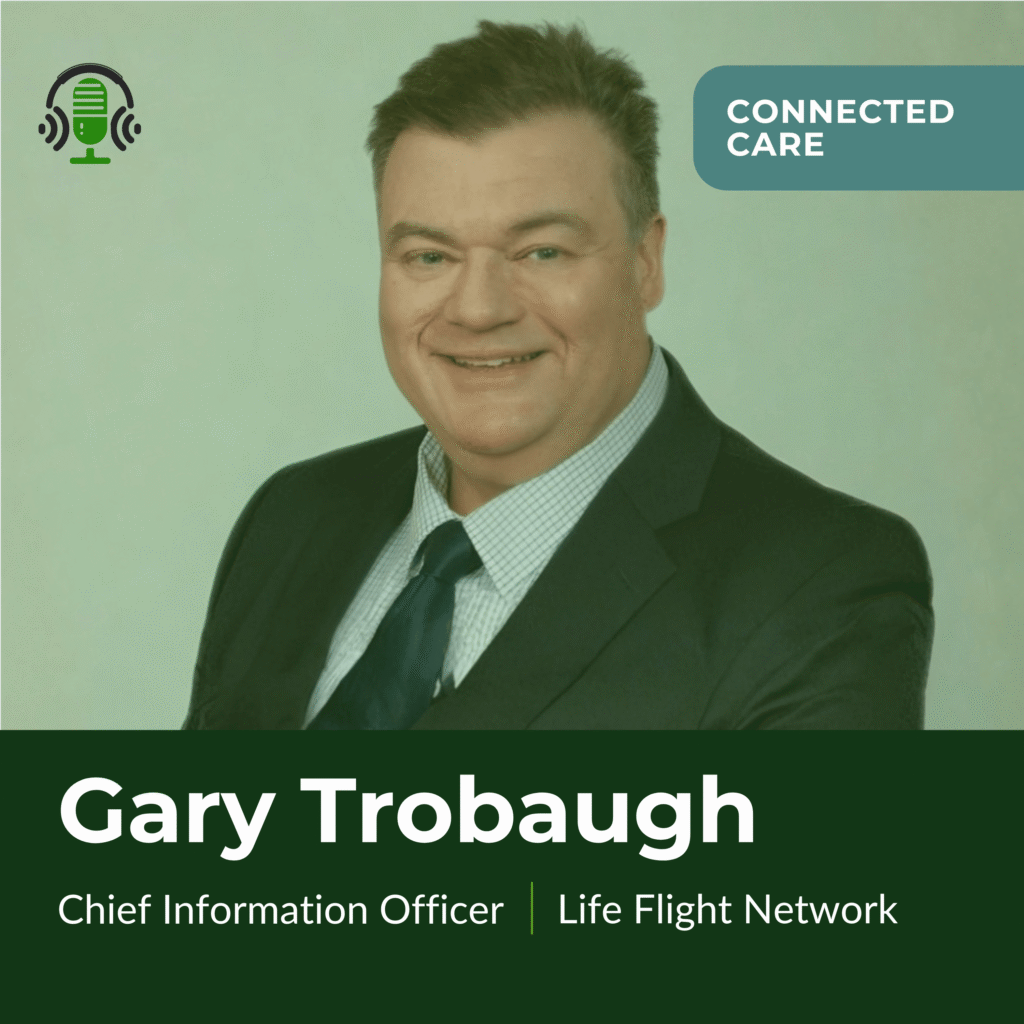
When Wireless Isn’t Optional
For most organizations, wireless-first is a strategy to consider. For Gary Trobaugh, Director of Information Technology at Life Flight Network, it’s the only way to operate. Life Flight runs air medical transport across rural and remote locations in the Pacific Northwest — places where fiber isn’t available, copper isn’t worth running, and a six-to-eight-week lead time from a regional ISP isn’t an option when a new base needs to be operational now.
In this episode of Go Beyond the Connection, Gary shares what wireless-first network infrastructure looks like from the inside of a life-critical industry. The conversation covers competitive advantage, security discipline, bandwidth saturation, and the practical realities of managing connectivity across a multi-state, multi-ISP footprint where the stakes are measured in patient outcomes.
Speed and Competitive Advantage Go Hand in Hand
Gary’s framing of wireless-first centers on two things: speed and accessibility. When a new base location becomes available, Life Flight can’t wait on infrastructure. The medical transport industry is intensely competitive — Gary describes rivals willing to spend aggressively to capture just one or two hospital contracts. The ability to stand up a wireless connection from a box already on the shelf, in a fraction of the time it would take to provision wired service, is a direct competitive advantage.
“What we’re noticing now is that due to scalability, the need for flexibility, and the importance of meeting our customers’ requirements, we are adopting a wireless approach.” -Gary Trobaugh
That shift isn’t just about speed of deployment. It’s about organizational agility — the capacity to respond to market conditions before a competitor does. The same logic applies internally. Gary points to shadow IT as the consequence of an IT department that moves too slowly. When employees need a solution and the official channel can’t deliver, they build their own. His team’s job is to be fast enough, and capable enough, that going rogue never seems worth it.
Security Is About Access, Not Connection Type
One of Gary’s sharpest contributions to this conversation is his reframe of wireless security. The concern isn’t whether the network is wired or wireless — it’s whether unauthorized access is possible at all.
“My real concern isn’t the method someone uses to access my data, but whether they can access it at all. With a secure network, whether they attempt entry through wired or wireless means is simply a potential access point.” -Gary Trobaugh
For Life Flight, that means investing in secure configurations, limiting PHI exposure, and ensuring that sensitive patient data is authenticated at the endpoint regardless of what path it travels. Gary also notes that bandwidth saturation is an emerging reality as wireless adoption accelerates. His team has experienced waitlists for Starlink coverage in areas that have become too popular too fast. The answer isn’t to pull back from wireless — it’s to maintain multiple ISP relationships and build redundancy into the architecture from the start.
Episode Highlights
- Wireless-first enables Life Flight to stand up new bases in a fraction of the time required for wired infrastructure
- Security risk is determined by data type and access controls, not by connection type
- Bandwidth saturation is a real and growing challenge as wireless adoption outpaces capacity
- IT departments that move too slowly create shadow IT problems — speed and reliability are both essential
- Cellular failover and intelligent traffic management tools like Bigleaf provide the reliability bridge in rural deployments
This episode is part of The Future of Connected Care series on Go Beyond the Connection. Listen to the full conversation and subscribe to stay current on how connectivity is reshaping healthcare operations and the industries that depend on it.
SUBSCRIBE & LISTEN >
Related Links:
- A Wireless First Future: Competitive Advantage Through Seamless Connectivity
- Lifesaving connectivity: How Life Flight Network stays connected in remote areas with Bigleaf
- Future-Proofing Your Business: How to Embrace Wireless Without Sacrificing Data Security
- How IT Partnerships Drive Internal Success
- Connectivity Insurance Strategy: Protecting Revenue Before It Disappears