When the CTO’s Job Is to See Around Corners
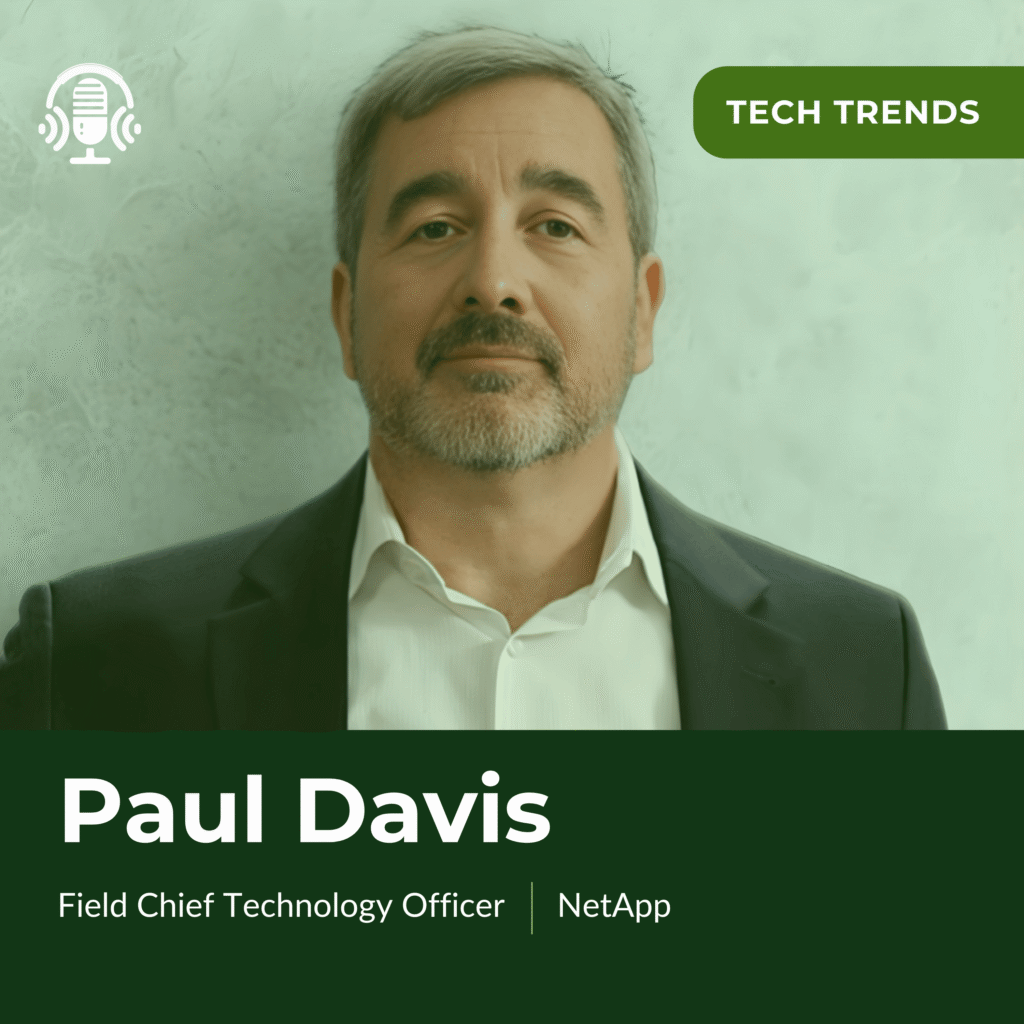
Technology leadership is not just about keeping systems running. For Paul Davis, Field CTO at NetApp, the role demands something harder: the ability to see what others are not yet looking at, ask the questions no one is asking yet, and build teams resilient enough to move forward even when things do not go according to plan.
In this episode of Go Beyond the Connection, Davis draws on a career that spans painting conservation at the Smithsonian, rebuilding critical Pentagon infrastructure after 9/11, global data center oversight, and enterprise sales alignment at NetApp to make the case for redefining failure in technology teams. His core argument is that failure is not a liability to be avoided, it is a learning mechanism to be structured, and organizations that build that structure into their culture consistently outpace those that do not.
Davis distinguishes the CTO’s function from that of the CIO clearly. CIOs manage operations. CTOs manage the horizon. The Field CTO role at NetApp extends that further, embedding technical strategy directly into the sales process so that customers and account teams alike are equipped to connect today’s infrastructure decisions to tomorrow’s business outcomes.
The Fail-Forward Framework
For Davis, redefining failure starts with understanding what resilience actually requires. Teams that can test, miss the mark, and move on without carrying forward the emotional weight of a setback are the teams that compound learning over time. “You build resiliency by having gone through failures several times,” he explains. “You want resilient people, learn fast, move on, and don’t bring that baggage with them.”
This mindset has direct implications for how technology teams approach AI adoption, architecture decisions, and cross-functional collaboration. It is not enough to iterate. Teams need the psychological safety to iterate honestly, which means leaders must model the behavior they want to see.
Breaking the Silos That Block Progress
One of Davis’s sharpest observations concerns the legacy divide between infrastructure and application teams. Historically, these functions could operate independently. Containerized workloads and intelligent data infrastructure have changed that permanently.
“A Field CTO can help people become aware that the silos of yesterday are not going to build the systems you want today or tomorrow,”
Application teams that have never considered how storage management functions could accelerate their work are leaving performance and cost savings on the table. Breaking down that divide is not just an organizational preference, it is an architectural necessity.
AI Demands Skills, Not Just Tools
Davis brings equal clarity to enterprise AI adoption. The gap between what AI tools can do and what most teams are equipped to do with them is widening. “As an individual, if you are not keeping up, you’re becoming one step removed from how the technology works,” he says. The implication for organizations is direct: AI does not compensate for a skills deficit. It amplifies it.
Episode Highlights
- How Field CTOs translate technical strategy into sales conversations that close
- Why oversimplified AI messaging creates downstream risk in implementation
- The difference between being involved in a project and being genuinely engaged in it
- How the fail-forward mindset applies to workforce planning as roles evolve with AI
- What authentic engagement looks like when teams are under pressure to deliver
The organizations that win in a high-velocity market are not the ones that avoid failure, they are the ones that fail faster, learn deliberately, and build systems designed to absorb and apply that learning. Paul Davis’s perspective offers a concrete roadmap for technology leaders who want to close the gap between strategy and execution.