

If Your Network Depends on One Connection, What Is Your Plan B?
From 2 a.m. server rooms to wireless-first networks
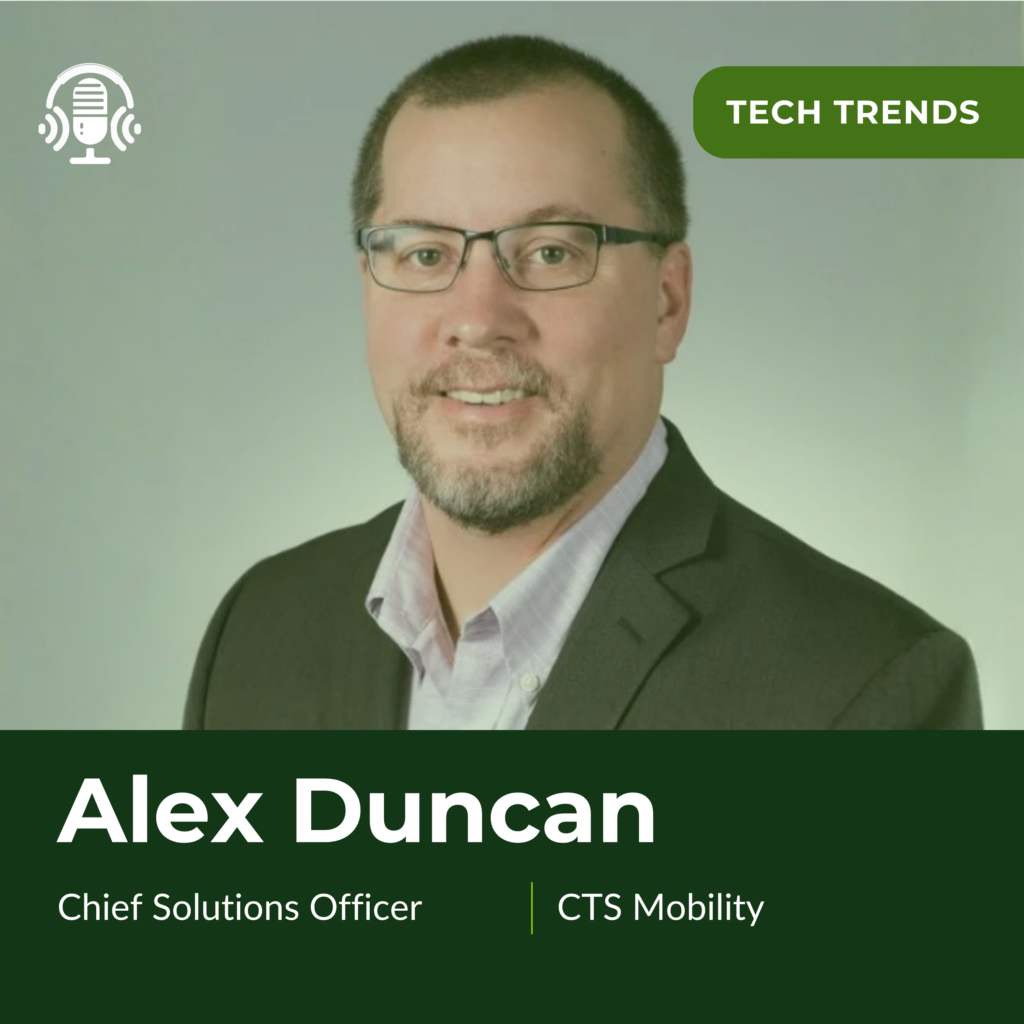
Alex Duncan, Chief Solutions Officer at CTS Mobility, has spent his career on both sides of the network. He ran infrastructure at the Tribune Company, where he was the person paged when something broke overnight, then moved through BlackBerry and Samsung into a decade at Verizon, where his team ran wireline and wireless for top global enterprise accounts. In this episode of Go Beyond the Connection, he joins host Steve MacDonald to argue that the era of the single connection is over.
His case rests on multi-path connectivity: treating fiber, broadband, 5G fixed wireless, and low Earth orbit satellite as a set of paths a network can steer between, instead of one circuit with a backup you hope never to use. Alex explains why that shift is happening now, what it asks of the people running the network, and how teams with shrinking budgets can take it on.
Why wireless is no longer the weak link
A wireline circuit is plug-and-play. You set the IP address and the connection is there. Wireless asks more of you. Alex describes shared spectrum, interference, and signal quality as part of about four components that all have to be right, along with equipment that matches what the carrier delivers.
His team learned the lesson in the field. They found routers hung over a pipe in a back room, adapters pointed toward the moon on a roof, and an MRI machine on the other side of a wall that dropped one connection every 15 minutes or so, whenever the magnets fired up.
The reputation wireless carries, he says, comes from 4G and older equipment, where higher latency timed out applications and made VoIP especially hard. With 5G, network slicing, and dedicated spectrum for fixed wireless access, plus tools that send each application down the best path, wireless can now behave much more like the circuit people trust.
Satellite earns a role, and some rules
Alex arrived at CTS from a carrier background doubting Starlink, expecting high latency and trouble in the rain. In practice, he says, it just works, and it keeps improving. It also bills by the gigabyte, much like early 4G, so he argues for clear roles for each path. His own example is a 50-gigabyte Starlink plan that carries traffic up to the cap, with everything else routed another way.
For IT teams stretched thin, he points to a device-as-a-service model: equipment, installation, project management, and managed services on an operating-expense basis. He describes CTS as Starlink’s first business-to-business authorized installer, and a self-optimizing cellular antenna that finds nearby carrier towers and lets a technician switch a backup SIM remotely.
Be flexible, but arrive with a plan
Customers who ask about bonding and low Earth orbit, Alex has found, often do not know what they need. They want something prescriptive they can plug in, even though every deployment is different. His answer is to be both: flexible enough to fit each environment and prescriptive enough to deliver a repeatable result.
Multi-path connectivity: plan for the next path before the first one fails
Alex has talked about future-proofing since the early 2000s, when his Tribune team built a centralized deployment before the cloud had a name. He applies the same discipline to satellite. As much as he admires the technology, he asks what happens if an asteroid goes through it.
“How do I make it so that if that happens, I’ve got another path to go instead of putting all of my eggs into one basket?”
-Alex Duncan, Chief Solutions Officer at CTS Mobility
His closing advice is practical. Build in resilience and consistency from the start, choose something that does not lock you into one technology, and remember that truck rolls are expensive. The fewer times someone has to touch a deployment, the better.
What you will hear in this episode
- Why 4G-era assumptions still shape views of wireless, and what 5G and slicing change
- Field lessons from large wireless rollouts, including an MRI machine that dropped the signal
- How to give fiber, 5G, and satellite paths clear roles, including metered Starlink data
- Why customers want a prescriptive, plug-and-play approach
- How a hardware-agnostic layer lets you change technology without rewriting your rules
- Why fewer truck rolls and no single point of failure matter more than any one technology
Bigleaf comes up throughout the conversation, in Alex’s words rather than ours. He describes it as an agnostic layer that handles route management and application steering across Starlink, Teltonika, Ericsson, and Digi hardware. Watch the full episode above, then browse more conversations on the Go Beyond the Connection page and subscribe wherever you listen.
SUBSCRIBE & LISTEN >
Related Links
- Why 5G Belongs Beside Fiber as a Primary Connection
- How IT Partnerships Drive Internal Success
- A Wireless First Future: Competitive Advantage Through Seamless Connectivity
- Beyond the Bargain: Price vs Value in Network Connectivity
- Future-Proofing Your Business: How to Embrace Wireless Without Sacrificing Data Security
- Companion article: Wireless-First Network Strategy
- Go Beyond the Connection YouTube playlist
- Talk to Bigleaf
- See Bigleaf in action